Organizers
- Carsten Marr, Helmholtz Munich, Germany
-
Q: How does this symposium's program reflect the latest advances and challenges in single cell biology, and how do you hope it will push the field forward?
“The program spans the full spectrum of the field: new experimental approaches to decode single cell biology, methods to analyze single data properly with latest AI and applications of single cell analysis in the clinics.”
Q: In what ways do you think this meeting fosters collaboration and innovation that other conferences might not?
“It’s a highly interactive meeting that fosters connections between young researchers and established leaders in the field.”
Q: What do you hope attendees will take away from the unique combination of expert talks and small group networking sessions?
“Ideas how to bridge between modalities, Ideas for new data generation, Ideas for clinical applications.”
- Fabian Theis, Helmholtz Munich, Germany
Q: As leaders in single cell biology, why do you consider the Cell Press Symposia: Decoding cellular complexity the must-attend symposium for scientists working at the intersection of single cell research and AI?
"The conference brings together the people and ideas shaping the next phase of single-cell biology, where AI is no longer a tool but a core driver of discovery. It’s a great opportunity to engage deeply with both biological insight and computational innovation in one place."
Q: How does this symposium’s program reflect the latest advances and challenges in single cell biology, and how do you hope it will push the field forward?
The program captures the field at a turning point - moving from descriptive atlases toward predictive and mechanistic models of cellular systems, in both health and disease. By explicitly addressing both technical advances and open challenges, the symposium helps define where single-cell biology needs to go next."
- Barbara Treutlein, ETH Zurich, Switzerland
- Bernadett Gaál, Editor-in-chief, Cell Systems, Cell Press
-
“As editors at Cell Press, we have a broad vantage point on emerging advances in single-cell biology, including at the intersection with AI and machine learning, through our close engagement with authors, reviewers, and the global research community. We bring this perspective to shape a program that brings forward emerging trends and voices that are likely to define the field’s next phase.
By emphasizing both cutting-edge and varied experimental modalities and the rapidly evolving AI-driven analytical approaches needed to interpret complex datasets, and bringing together researchers focused on a range of biological questions and study systems, our hope is that the meeting will foster meaningful collaboration within the single-cell biology community.”
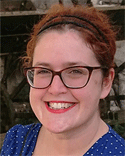
- Judith Nicholson, Scientific editor, Cell Genomics, and Cell, Cell Press
-
Q: In what ways do you think this meeting fosters collaboration and innovation that other conferences might not?
"We have a range of speakers who cross the boundary between single cell biology from a range of disciplines, and AI methodology. The intention is to bring together researchers who create cutting edge AI methods with the researchers who will use them to power their breakthrough discoveries in single cell biology."Q: What do you hope attendees will take away from the unique combination of expert talks and small group networking sessions?
"We hope that the small group sessions can inspire new collaborations, bring together people from different research backgrounds to spark new ideas, and allow the next generation of single cell biologists to interact with the current leaders in the field."
Scientific advisors
- Heiko Lickert, Helmholtz Munich, Germany
- Antonio Scialdone, Helmholtz Munich, Germany
- Raffaele Teperino, Helmholtz Munich, Germany